
King delivered but who really wrote the speech
On August 28th, 1963, a defining moment in the fight for civil rights unfolded as Martin Luther King Jr. delivered his powerful “I Have a Dream” speech at the March on Washington for Jobs and Freedom event.
Beyond the speech’s historical significance is King’s ability to convince through his rhetorical brilliance.
Written by Clarence Jones, Stanley Levison, and others, including MLK, the “I have a dream” speech combined speech writing and speech delivery brilliance.
The “I have a dream” speech is a masterpiece.
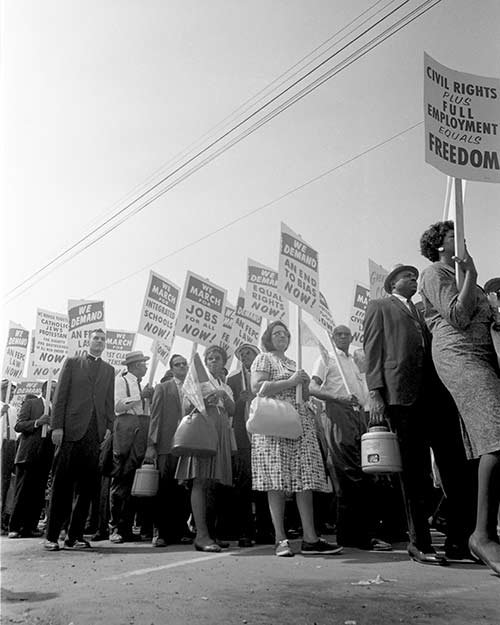
Historical and cultural context of the “I have a dream” speech
So, what was going on in the United States on August 28th, 1963? This date was at the height of the civil rights movement in the United States. The country was struggling with deep-seated racial inequality and segregation. Blacks were fighting for their fundamental rights and freedoms.
The crowd at the Lincoln Memorial was 250,000 strong. Roy Ottaway Wilkins, John Lewis, and Whitney Young were among the speakers that day. Martin Luther King was the last to speak. His speech was a demand for justice and equality.
The “I Have a Dream” speech was a call to action, urging the nation to live up to its founding principles of freedom and equality.
The March on Washington was a defining moment in the civil rights movement, and King’s speech became its most memorable and influential moment.Fun reading about the “I have a dream” speech, Click here
Beyond the emotion, there is the skill and art
Martin Luther King’s “I Have a Dream” speech resonates because he mastered the rhetorical techniques needed to deliver a compelling message. These devices amplify the power of words and evoke strong emotions in listeners. King’s notable strategic choices of repetition, parallelism, and vivid metaphors make his message unforgettable.
Let’s look at ten reasons the “I Have a Dream” speech was so influential.
Repetition Hammers in your message
King used repetition like a sonic hammer, driving his message home with rhythmic cadence using the expressions “I have a dream” and “Let freedom ring.”
For instance, at second 10:58, King introduces the word “dream” with this sentence
“So, even though we face the difficulties of today and tomorrow, I still have a dream”
He then introduces the word “dream” in different sentence contexts again and again to ensure the audience ties his dream with that of the American dream.
“. . . it is a dream deeply rooted in the American dream”
“. . . I have a dream today”
“. . . I have a dream that one day down in Alambama. . . ”
“. . . I have a dream that one day every valley shall be exalted.”
He creates a parenthesis by ending the last sentence of this section of the speech with “I have a dream”
“the sons of former slaves and the sons of former slave owners will be able to sit down at the table of brotherhood, I have a dream”
Bringing back the expression nails the idea that this will be the speech’s theme from now on. The word “dream” returns eleven times in the whole speech.
“I have a dream that one day this nation will rise up and live out the true meaning of its creed: ‘We hold these truths to be self-evident, that all men are created equal.”Martin Luther King uses the same method of repetition when he quotes last line of the first verse of the spiritual My Country, tis of thee “Let freedom ring”. Using the same method as “I have a dream” King drives “Let freedom ring” no less than eleven times.
Symbolism Painting a tapestry of Words
King’s speech painted his “I have a dream” speech with strong imagery and symbolic language. Metaphors such as the “promissory note” and the “bad check” artfully communicated the unfulfilled promises of freedom. This symbolic language transformed the speech into a shared vision, crossing racial boundaries through a common understanding of the dream.
“We refuse to believe that the bank of justice is bankrupt. We refuse to believe that there are insufficient funds in the great vaults of opportunity of this nation.”“. . . we will not be satisfied until justice rolls down like waters and righteousness like a mighty stream.”
Emotional Resonance: A Heartfelt Connection
King’s ability to evoke deep emotions among his audience is a testament to his oratory mastery. He fostered empathy and a shared sense of humanity through carefully chosen words and a passionate delivery. The speech is more than intellectual engagement. It leaves an indelible mark on the hearts of those who heard it.
“Now is the time to make justice a reality for all of God’s children.”
Balancing Idealism and Realism:
King skillfully balanced optimism with a statement of the harsh realities of racial injustice. By confronting the “manacles of segregation” and the “chains of discrimination,” he grounded the dream in the painful truths of the era while inspiring hope for a brighter tomorrow. This delicate balance elevated the speech beyond rhetoric, making it influential and a profound commentary on the times.
A Speech Speckled With Allusions:
Martin Luther King’s speech is a symphony of allusions, drawing from diverse sources such as the Bible, the Constitution, and other famous speeches. This strategic use of allusion added depth and resonance to King’s words by connecting the struggle for civil rights to broader ideals deeply held in American culture.
“I have a dream that one day every valley shall be exalted, every hill and mountain shall be made low.”
Rhythmic Pacing: A Poet’s Touch:
King’s speech exhibited a poetic quality in its rhythmic pacing. The deliberate ebb and flow of his words made the speech almost musical. This musicality held the audience captive. This rhythmic finesse elevated the speech from a political address to a work of art.
“Let freedom ring from the mighty mountains of New York. Let freedom ring from the heightening Alleghenies of Pennsylvania.”
Inclusive Language: Weaving Unity:
To ensure everyone felt they were addressed, King used inclusive language. By repeatedly using phrases like “we” and “our,” he built a sense of unity, making the “dream” not only his own but a collective aspiration for all. This inclusive approach made the speech a rallying cry for a diverse America that needed to unite.
“We cannot walk alone, and as we walk, we must make the pledge that we shall always march ahead.”
The Power of Silence
King’s strategic pauses punctuated his speech, allowing the audience to absorb and reflect on his words. Well-placed pauses transformed the speech into a conversation, engaging listeners in a dialogue on justice and equality.
“Free at last! Free at last! Thank God Almighty, we are free at last!”
Anaphora: Crafting Memorable Mantras:
The deliberate use of anaphora, the repetition of a word or phrase at the beginning of successive clauses, amplified the impact of King’s speech. “Now is the time,” “I have a dream,” and “Let freedom ring” became memorable mantras, reinforcing key themes and galvanizing the audience.
“Now is the time to rise from the dark and desolate valley of segregation to the sunlit path of racial justice.”
The Call to Action: A Blueprint for Change:
Beyond the rhetorical flair, King’s speech was a strategic call to action. His appeal for the audience to return to their communities and demand their rights transformed the dream into a catalyst for change. This call to action exemplifies the transformative power of effective rhetoric.
“Let freedom ring. And when this happens, and when we allow freedom to ring, when we let it ring from every village and every hamlet, from every state and every city, we will be able to speed up that day when all of God’s children—black men and white men, Jews and Gentiles, Protestants and Catholics—will be able to join hands and sing in the words of the old Negro spiritual: ‘Free at last! Free at last! Thank God Almighty, we are free at last!'”
Vocal tone
Being the son of a preacher was significant in Martin Luther King’s ability to drive home a message. All the rhetorical techniques mentioned above would be challenging to apply without hundreds of hours of practice and observation. Delivering this seamlessly and naturally was vital in convincing the public of Martin Luther King’s message.
Conclusion:
Martin Luther King Jr.’s “I Have a Dream” speech is not merely a historical artifact but a timeless masterpiece that continues to resonate. Its rhetorical brilliance, manifested through repetition, symbolism, emotional resonance, a nuanced balance of idealism and realism, allusions, rhythmic pacing, inclusive language, strategic pauses, anaphora, and a compelling call to action, remains unmatched. As we revisit this iconic address, we marvel at the enduring power of words to inspire, ignite change, and shape the course of history.
Here is the full text fo the Martin Luther King speech
The actual speech in text
Five score years ago, a great American, in whose symbolic shadow we stand today, signed the Emancipation Proclamation. This momentous decree came as a great beacon light of hope to millions of slaves, who had been seared in the flames of whithering injustice. It came as a joyous daybreak to end the long night of their captivity. But one hundred years later, the negro America is still not free. One hundred years later, the life of the negro American is still sadly crippled by the manacle of segregation and the chains of discrimination.
One hundred years later, the colored American lives on a lonely island of poverty in the midst of a vast ocean of material prosperity. One hundred years later, the colored American is still languishing in the corners of American society and finds himself an exile in his own land So we have come here today to dramatize a shameful condition.
In a sense we have come to our Nation’s Capital to cash a check. When the architects of our great republic wrote the magnificent words of the Constitution and the Declaration of Independence, they were signing a promissory note to which every American was to fall heir.
This note was a promise that all men, yes, black men as well as white men, would be guaranteed the inalienable rights of life liberty and the pursuit of happiness.
It is obvious today that America has defaulted on this promissory note insofar as her citizens of color are concerned. Instead of honoring this sacred obligation, America has given its colored people a bad check, a check that has come back marked “insufficient funds.”
But we refuse to believe that the bank of justice is bankrupt. We refuse to believe that there are insufficient funds in the great vaults of opportunity of this nation. So we have come to cash this check, a check that will give us upon demand the riches of freedom and security of justice.
We have also come to his hallowed spot to remind America of the fierce urgency of Now. This is not time to engage in the luxury of cooling off or to take the tranquilizing drug of gradualism.
Now is the time to make real the promise of democracy.
Now it the time to rise from the dark and desolate valley of segregation to the sunlit path of racial justice.
Now it the time to lift our nation from the quicksand of racial injustice to the solid rock of brotherhood.
Now is the time to make justice a reality to all of God’s children.
I would be fatal for the nation to overlook the urgency of the moment and to underestimate the determination of it’s colored citizens. This sweltering summer of the colored people’s legitimate discontent will not pass until there is an invigorating autumn of freedom and equality. Nineteen sixty-three is not an end but a beginning. Those who hope that the colored Americans needed to blow off steam and will now be content will have a rude awakening if the nation returns to business as usual.
There will be neither rest nor tranquility in America until the colored citizen is granted his citizenship rights. The whirlwinds of revolt will continue to shake the foundations of our nation until the bright day of justice emerges.
We can never be satisfied as long as our bodies, heavy with the fatigue of travel, cannot gain lodging in the motels of the highways and the hotels of the cities.
We cannot be satisfied as long as the colored person’s basic mobility is from a smaller ghetto to a larger one.
We can never be satisfied as long as our children are stripped of their selfhood and robbed of their dignity by signs stating “for white only.”
We cannot be satisfied as long as a colored person in Mississippi cannot vote and a colored person in New York believes he has nothing for which to vote.
No, no we are not satisfied and we will not be satisfied until justice rolls down like waters and righteousness like a mighty stream.
I am not unmindful that some of you have come here out of your trials and tribulations. Some of you have come from areas where your quest for freedom left you battered by storms of persecutions and staggered by the winds of police brutality.
You have been the veterans of creative suffering. Continue to work with the faith that unearned suffering is redemptive.
Go back to Mississippi, go back to Alabama, go back to South Carolina go back to Georgia, go back to Louisiana, go back to the slums and ghettos of our modern cities, knowing that somehow this situation can and will be changed.
Let us not wallow in the valley of despair. I say to you, my friends, we have the difficulties of today and tomorrow.
I still have a dream. It is a dream deeply rooted in the American dream.
I have a dream that one day this nation will rise up and live out the true meaning of its creed. We hold these truths to be self-evident that all men are created equal.
I have a dream that one day out in the red hills of Georgia the sons of former slaves and the sons of former slaveowners will be able to sit down together at the table of brotherhood.
I have a dream that one day even the state of Mississippi, a state sweltering with the heat of oppression, will be transformed into an oasis of freedom and justice.
I have a dream that my four little children will one day live in a nation where they will not be judged by the color of their skin but by their character.
I have a dream today.
I have a dream that one day down in Alabama, with its vicious racists, with its governor having his lips dripping with the words of interposition and nullification; that one day right down in Alabama little black boys and black girls will be able to join hands with little white boys and white girls as sisters and brothers.
I have a dream today.
I have a dream that one day every valley shall be engulfed, every hill shall be exalted and every mountain shall be made low, the rough places will be made plains and the crooked places will be made straight and the glory of the Lord shall be revealed and all flesh shall see it together.
This is our hope. This is the faith that I will go back to the South with. With this faith we will be able to hew out of the mountain of despair a stone of hope.
With this faith we will be able to transform the jangling discords of our nation into a beautiful symphony of brotherhood.
With this faith we will be able to work together, to pray together, to struggle together, to go to jail together, to climb up for freedom together, knowing that we will be free one day.
This will be the day when all of God’s children will be able to sing with new meaning “My country ’tis of thee, sweet land of liberty, of thee I sing. Land where my father’s died, land of the Pilgrim’s pride, from every mountainside, let freedom ring!”
And if America is to be a great nation, this must become true. So let freedom ring from the hilltops of New Hampshire. Let freedom ring from the mighty mountains of New York.
Let freedom ring from the heightening Alleghenies of Pennsylvania.
Let freedom ring from the snow-capped Rockies of Colorado.
Let freedom ring from the curvaceous slopes of California.
But not only that, let freedom, ring from Stone Mountain of Georgia.
Let freedom ring from every hill and molehill of Mississippi and every mountainside.
When we let freedom ring, when we let it ring from every tenement and every hamlet, from every state and every city, we will be able to speed up that day when all of God’s children, black men and white men, Jews and Gentiles, Protestants and Catholics, will be able to join hands and sing in the words of the old spiritual, “Free at last, free at last. Thank God Almighty, we are free at last.”
NPR has the full audio of the speech. Click the button below